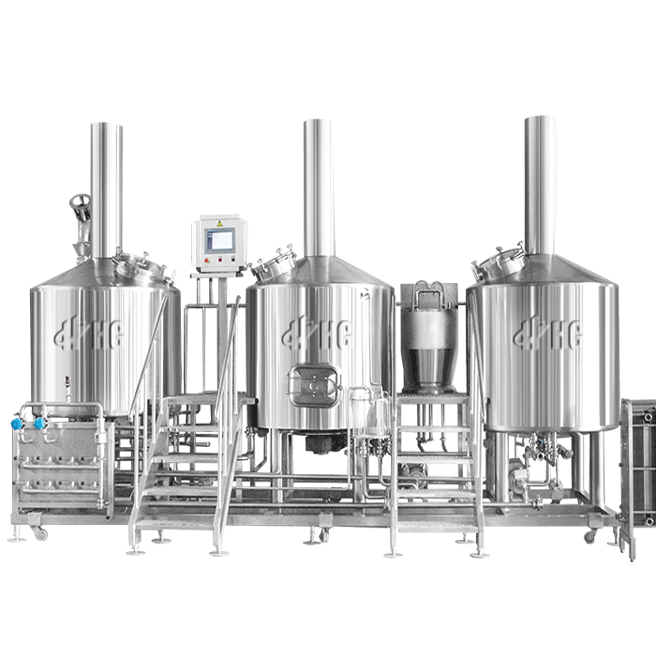
The right brewhouse size comes from annual saleable beer volume, realistic batch yield, brewing days, turns per day, cellar capacity, and product mix. A 10 BBL brewhouse producing 9 BBL of saleable beer per turn needs about 334 turns to supply 3,000 BBL annually. At 48 production weeks, that is roughly 7 turns per week. A 20 BBL system at the same 90% saleable yield needs about 167 turns. Choose capacity from finished-beer demand rather than vessel nameplate volume, then check whether labor, fermenters, heating, cooling, water, drainage, and floor space can support the required schedule.
Start by converting the sales forecast into finished beer rather than wort. In the U.S., one beer barrel is 31 U.S. gallons, or about 117.3 liters. If annual demand is 2,500 BBL, the brewery must package or serve about 293,000 liters. A 10 BBL brewhouse does not supply 10 BBL of finished beer after every brew because trub, yeast, hops, tank transfers, samples, filtration, and packaging remove volume before sale.
A practical planning model can use several yield cases instead of one optimistic number. For a nominal 10 BBL batch, an 85% finished yield gives 8.5 BBL, 90% gives 9 BBL, and 95% gives 9.5 BBL. At 3,000 BBL of annual sales, those assumptions require about 353, 334, and 316 turns respectively. A five-percentage-point change in recovery can therefore add dozens of brew cycles over a year.
| Nominal brewhouse | Planning yield | Finished beer/turn | Turns for 3,000 BBL/year | Turns/week at 48 weeks |
|---|---|---|---|---|
| 5 BBL | 90% | 4.5 BBL | 667 | 13.9 |
| 10 BBL | 90% | 9.0 BBL | 334 | 7.0 |
| 15 BBL | 90% | 13.5 BBL | 223 | 4.6 |
| 20 BBL | 90% | 18.0 BBL | 167 | 3.5 |
| 30 BBL | 90% | 27.0 BBL | 112 | 2.3 |
The batch count in the table matters more operationally than the annual capacity printed in a quotation. A 5 BBL system can technically make 3,000 BBL a year, but nearly 14 turns every week may require brewing on four or five days. A 20 BBL system needs fewer than four turns weekly under the same 90% assumption, leaving more hours for cleaning, maintenance, cellar work, packaging, and recipe changes.
A system should be sized against the number of turns the staff can repeatedly complete, not the highest number of turns demonstrated during one unusually long production day.
Turn time needs its own estimate. Suppose a 10 BBL two-vessel brewhouse averages 6 hours for the first batch and can overlap part of the second mash with the first boil. Two turns may fit inside an 8–10 hour production window, depending on lautering, heating rate, whirlpool time, cleaning, automation, and recipe. Three turns can push the same day substantially longer unless the vessel arrangement supports overlapping operations.
Brewhouse configuration therefore changes the usefulness of the same nominal volume. A 15 BBL two-vessel setup and a 15 BBL three- or four-vessel setup both make approximately 15 BBL per nominal turn, but the additional vessels can separate mash, lauter, kettle, and whirlpool work. For a brewery planning more than two turns on regular production days, vessel scheduling deserves as much attention as volume.
The next comparison belongs in the cellar. Assume a 10 BBL brewhouse feeds five 20 BBL fermenters. Two turns fill one fermenter, giving 100 BBL of nominal fermentation space. If an ale occupies a vessel for 14 days, the theoretical tank cycle is much faster than a beer requiring 28 days of fermentation and conditioning. Doubling tank residence time roughly halves the number of batches a fixed cellar can accept during the same period.
That difference becomes larger when the brewery sells several styles. A pale ale might leave a tank much sooner than a lager, strong beer, heavily dry-hopped IPA, or barrel-related product. If 30% of annual volume remains in tanks for twice as long as the other 70%, a simple “total fermenter gallons divided by batch gallons” calculation will overstate practical capacity.
For that reason, list expected tank days by product before selecting the brewhouse. A brewery selling 60% fast-moving ale, 25% dry-hopped beer, and 15% longer-conditioned lager needs a different cellar schedule from one selling 90% of its volume through two ales. The same 3,000 BBL annual output can require a different number and mix of fermenters.
Batch size also affects inventory. If a taproom sells only 1 BBL per week of a specialty beer, a 20 BBL batch represents about 20 weeks of demand before process loss. A 5 BBL batch represents about five weeks. Large equipment may reduce brew frequency, but it can put too much slow-selling beer into tanks or cold storage, especially where freshness and frequent menu changes matter.
High-volume packaged brands favor larger batches; rotating taproom menus often benefit from smaller production lots or a separate pilot brewhouse.
Sales concentration can make the choice easier. If three beers account for 75% of annual volume, larger batches can reduce the number of production cycles without creating many slow-moving products. If the largest individual beer represents only 12% of annual sales, flexibility becomes more important because the annual schedule contains many recipe changes, ingredient swaps, cleaning cycles, and smaller inventory runs.
Peak months should then replace annual averages in the capacity test. A brewery selling 3,600 BBL per year averages 300 BBL per month, but a seasonal profile might run at 220 BBL in January and 420 BBL in July. Designing around 300 BBL alone leaves a 40% gap during the 420 BBL month unless the brewery builds stock earlier or adds brewing days.
Use a month-by-month model rather than dividing annual sales by 12. If May through August represents 45% of yearly sales, production may need to run ahead of shipments during spring. Fermenter availability, cold storage, packaged inventory space, shelf-life targets, and working capital then become part of brewhouse sizing rather than separate topics.
Labor provides another measurable comparison. Assume one 10 BBL turn requires 5 operator-hours of hands-on work across milling, brewing, transfer, cleaning, records, and preparation, while a 20 BBL turn requires 6.5 operator-hours. At 90% finished yield, the smaller system uses about 0.56 labor-hours per finished BBL; the larger example uses about 0.36. Actual figures vary by automation and layout, but the method exposes the labor effect of repeated small batches.
At 3,000 BBL annually, the difference between 334 turns and 167 turns can also affect chemical use, quality-control sampling, grain handling, cleaning cycles, and pump operating time. A smaller purchase price should therefore be compared with several years of additional production work rather than only the equipment invoice.
Utilities can set a lower operating ceiling than the vessels themselves. Heating 10 BBL of wort is different from heating 30 BBL within the same production timetable, while the heat exchanger must cool the larger hot-wort volume quickly enough for the next operation. A brewhouse quoted for two daily turns may not achieve that schedule if steam supply, electrical service, cold-water flow, or glycol capacity was sized for one.
When comparing a Beer brewery system, request heating input, expected heat-up time, wort-cooling flow, hot-liquor demand, cold-liquor demand, pump ratings, electrical load, and recommended utility connections for the exact vessel size. A production-rate claim is useful only when the building can supply the required utilities at the same time.
Water planning deserves similar treatment. Brewing water is only part of brewery consumption; cleaning vessels, rinsing floors, washing kegs, packaging, and utility equipment also use water. Instead of assuming one fixed brewery-wide ratio, estimate each operation by batch and production day. A schedule moving from five to ten turns per week can raise both water demand and wastewater volume even when the building footprint stays unchanged.
Physical layout can remove an apparently suitable option. A 20 BBL vessel may fit the floor plan on a drawing but still require service clearance, platforms, piping, valve access, grain movement, hose routes, chemical handling space, and room to remove pumps or motors. Measure ceiling height, door openings, loading access, floor slope, drains, and structural limits before approving fabrication.
Expansion planning should use the same numbers. If a 10 BBL brewhouse is expected to reach 80% of the preferred weekly schedule by year three, adding cellar tanks alone may not create enough production time. If it reaches only 45% while fermenters are full, spending on a larger brewhouse would address the wrong equipment area.
One useful procurement comparison is to model 50%, 75%, and 100% of the five-year sales forecast. For a projected 4,000 BBL year, test 2,000, 3,000, and 4,000 BBL against each equipment option. At 90% finished yield, a 10 BBL system needs about 223, 334, and 445 annual turns; a 20 BBL system needs about 112, 167, and 223.
The purchase model should also include beer mix rather than only total volume. A brewery can allocate each product its forecast percentage, finished yield, batch size, fermentation days, and monthly demand. A 4,000 BBL operation with 65% of sales in two regular products may use a larger brewhouse efficiently, while the same volume divided among 25 frequently changing beers can create unwanted inventory.
Before accepting a supplier proposal, compare the quoted size against a short operating sheet:
-
Annual saleable volume for years 1, 3, and 5
-
Monthly peak volume, not only the annual average
-
Finished yield assumptions such as 85%, 90%, and 95%
-
Normal turns per day and maximum planned turns per day
-
Brewing days and operating weeks per year
-
Fermenter size, quantity, and average tank residence days
-
Percentage of volume produced as high-hop or longer-conditioned beer
-
Hands-on labor hours per turn
-
Steam, electric, water, glycol, and drainage requirements
-
Available floor area and planned space for additional tanks
If a 15 BBL option meets the year-five production plan with 1.5 turns per normal brewing day while a 10 BBL option requires 2.5–3 turns, the purchase comparison should include the additional labor and cleaning cycles. If a 20 BBL option operates below 40% of available brewing time for several years, the unused capacity should also appear in the financial model rather than being described simply as room for growth.
Supplier quotations are easier to compare when every manufacturer receives the same production assumptions. Ask each supplier to show expected wort volume into the fermenter, recommended maximum turns during an 8- and 10-hour day, vessel working volumes, heating time, lautering assumptions, cleaning time, and utility consumption. Differences between a stated 20 BBL capacity and the amount of wort transferred per batch can materially change the annual turn count.
Finally, verify the schedule using one representative busy week before ordering. If that week requires 75 BBL of pale ale, 40 BBL of IPA, and 20 BBL of seasonal beer, map every mash, transfer, fermentation tank, cleaning period, and packaging requirement onto actual working hours. A brewhouse size that fits that calendar with realistic staff hours and about 10–20% scheduling room is more useful than a larger vessel selected from annual barrel volume alone.