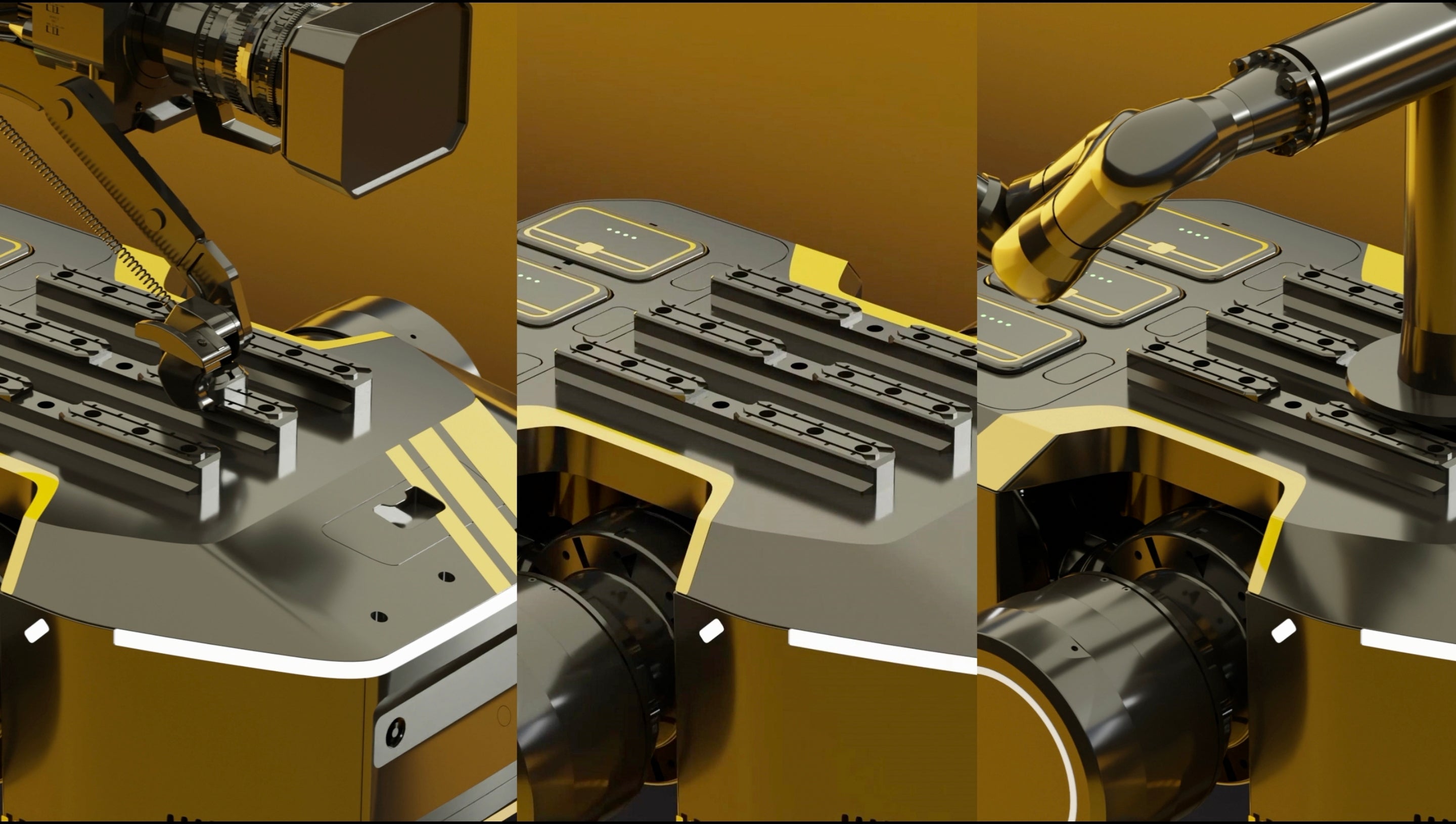
TITA Robot provides autonomous security patrol and industrial data collection through mobile navigation, AI perception, and multi-sensor inspection technologies. It can collect visual, thermal, acoustic, and environmental data while operating continuously in factories, warehouses, energy facilities, and public infrastructure. With SLAM navigation accuracy, remote monitoring capability, and automated inspection routes, TITA Robot helps reduce manual inspection frequency and improve equipment monitoring efficiency.
Modern industrial facilities require inspection systems that can operate for long periods without interruption. Manual patrols are often limited by working hours, environmental conditions, and inconsistent recording methods. A mobile robotic platform allows inspection tasks to be performed at scheduled intervals, collecting standardized data from the same locations over time.
A 2024 industrial automation survey reported that more than 60% of manufacturers were increasing investment in robotics and digital monitoring systems to improve operational visibility and maintenance efficiency.
TITA Robot combines autonomous movement, sensor integration, and AI analysis to perform security patrol and industrial inspection tasks. As an advanced inspection and mapping robot, it can create digital maps of operational areas, navigate according to planned routes, and collect information from different locations.
The robot uses technologies such as LiDAR, cameras, inertial sensors, and positioning systems to understand surrounding environments. SLAM technology allows the robot to build maps while moving, which is widely used in autonomous vehicles and industrial robots. Many commercial SLAM systems can achieve centimeter-level positioning accuracy under suitable indoor conditions.
The collected environmental information allows TITA Robot to perform repeated inspections with consistent procedures. Compared with manual inspection records, robotic inspection provides digital data that can be stored, compared, and analyzed over longer periods.
In industrial facilities operating 24 hours per day, automated inspection systems can increase inspection frequency from several times per week to multiple times per day, depending on the deployment schedule.
Security patrol is one of the main application areas of TITA Robot. Large facilities such as warehouses, campuses, factories, and transportation centers often require continuous monitoring across wide areas. Fixed cameras can only observe specific positions, while mobile robots can move between different zones.
The robot can patrol predefined routes, capture images, detect abnormal situations, and send information to management platforms. AI-based vision systems can support functions including unauthorized access detection, equipment appearance inspection, and safety condition monitoring.
A typical security patrol workflow includes:
| Process | Robot Function | Collected Data |
|---|---|---|
| Route planning | Autonomous navigation | Map information and location data |
| Area inspection | Camera and sensor scanning | Images, video, environmental records |
| Abnormal detection | AI analysis | Alerts and inspection results |
| Data storage | Cloud or local platform connection | Historical inspection records |
This process allows security teams to review inspection information without requiring personnel to manually check every area.
Industrial data collection requires accurate and repeatable measurement methods. Manufacturing plants, energy facilities, and logistics centers contain thousands of equipment units that require regular condition checks. TITA Robot can collect information from machines, production areas, and storage locations during routine patrol missions.
Equipment monitoring programs introduced between 2019 and 2025 increasingly combined robotics, IoT sensors, and data platforms to reduce unexpected equipment downtime.
The robot can collect different types of industrial information depending on the installed sensors:
-
High-resolution images for equipment appearance inspection
-
Thermal data for temperature condition analysis
-
Audio signals for abnormal machine sound detection
-
Environmental information such as temperature and humidity
-
Location-based inspection records
These data sources allow maintenance teams to review equipment conditions using digital records rather than relying only on manual notes.
Thermal inspection is commonly used in electrical systems, manufacturing equipment, and energy infrastructure. Abnormal temperature increases may indicate problems such as excessive friction, electrical connection issues, or component aging. A mobile robot equipped with thermal sensors can inspect multiple locations during a single mission.
For example, in a factory environment, the robot can visit electrical cabinets, motors, production equipment, and storage areas according to a planned schedule. The collected thermal images can be compared with previous records to identify changes.
A 2023 industrial maintenance report showed that predictive maintenance programs using sensor-based monitoring could reduce unplanned equipment downtime by approximately 20% to 30% in suitable applications.
Data communication is another important part of robotic inspection systems. TITA Robot can connect inspection activities with centralized management platforms, allowing operators to view robot status, inspection routes, and collected information remotely.
A connected inspection system usually includes:
| Component | Function |
|---|---|
| Mobile robot | Movement and data collection |
| Sensors | Environmental and equipment information capture |
| Communication network | Data transmission |
| Management platform | Data review and task scheduling |
| AI software | Image and signal analysis |
This structure allows multiple inspection tasks to be organized in a single digital environment.
Industrial environments often include areas that are difficult or unsafe for frequent human access. Examples include high-temperature production zones, large storage facilities, electrical rooms, and outdoor infrastructure areas. Robotic inspection reduces the need for workers to enter these locations repeatedly.
TITA Robot can operate according to planned schedules and maintain consistent inspection patterns. This improves inspection coverage and provides additional information for maintenance planning.
According to robotics industry reports from 2022, autonomous mobile robots were increasingly adopted in manufacturing and logistics facilities, with adoption rates growing as sensor prices decreased and AI software became more accessible.
The flexibility of mobile robots allows them to support different industries. In warehouses, robots can inspect storage areas and monitor operational conditions. In factories, they can collect equipment data and support maintenance teams. In public facilities, they can provide security patrol services.
The deployment process usually includes several stages:
-
Creating digital maps of the working environment
-
Setting inspection routes and schedules
-
Configuring sensors and data collection tasks
-
Connecting the robot with management systems
-
Reviewing collected information and improving inspection plans
Each stage helps adapt the robot to specific operational requirements.
Artificial intelligence further improves the ability of inspection robots to process large amounts of collected information. Instead of only recording images or sensor data, AI systems can classify conditions and identify situations that require attention.
From 2020 onward, AI-based industrial inspection applications expanded rapidly as computer vision models improved. Some industrial vision systems can achieve over 90% accuracy in controlled inspection tasks, although performance depends on lighting, equipment type, and data quality.
TITA Robot combines autonomous mobility with industrial sensing capabilities to support modern inspection requirements. Its ability to move, collect data, and connect with digital platforms makes it suitable for facilities that need regular monitoring across large areas.
As factories and infrastructure systems continue adopting automation technologies, mobile inspection robots will become more common in daily operations. By combining navigation, sensing, and data management, TITA Robot provides a practical approach for improving security patrol and industrial data collection processes.